The Living-Room Classroom
A good game should earn your weekend. When the weekend includes two kids on the couch, it also has to earn their attention and survive their chaos.
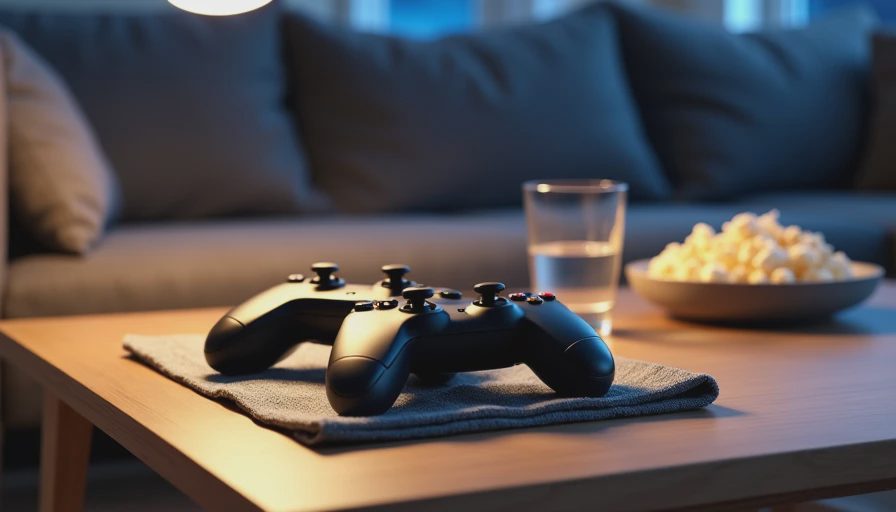
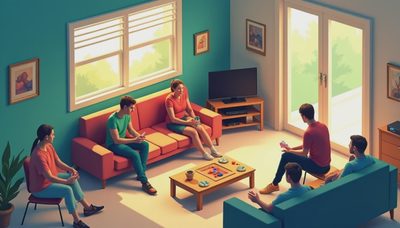
A few years ago I started setting aside occasional family gaming nights. Nothing elaborate. One or two hours on the Switch or the living-room TV after dinner, choosing titles that would not melt down if a seven-year-old took the controller. I expected these sessions to be lighter, simpler, and mostly about sharing screen time. What I did not expect was how clearly they would expose the difference between design that merely looks good and design that actually works.
Kids are ruthless testers. They do not care about production values, critical consensus, or the developer’s stated intentions. They care whether they can understand what to do, whether the game feels fair, and whether they can jump back in after running to the kitchen for a snack. Watching them play forced me to notice the same qualities in the games I choose for myself.
Clarity Is Not Optional
The first lesson was immediate. If the game does not explain itself clearly in the moment, the session stalls. Kids will not open a menu to re-read a tutorial prompt that disappeared three minutes ago. They will not remember a control scheme that was demonstrated once during a cutscene. They simply stop and ask, “What am I supposed to do?”
That question is useful. A lot of adult games rely on the assumption that the player will absorb information the first time and retain it across sessions. Family nights revealed how often that assumption fails. The games that worked best for us were the ones that kept critical information visible, repeated key instructions without condescension, and made the next objective obvious at a glance.
I started applying the same standard to the games I play alone after the kids are in bed. If I have to reconstruct the logic of a system from memory after a short break, the design is asking more of me than it should.
Fairness Beats Spectacle
The second lesson was about fairness. Kids have a low tolerance for feeling cheated. A death that feels unreadable, an enemy attack that gives no clear warning, or a progression gate that appears without explanation will end the fun faster than any lack of graphical fidelity.
Watching that reaction repeatedly made me notice the same friction in more complex games. I had been willing to absorb a certain amount of opaque difficulty or poorly telegraphed systems because the overall experience was otherwise strong. Family nights lowered my patience for that trade-off. A game can be challenging. It should not feel arbitrary. The distinction matters more when the player’s available time and goodwill are both limited.
The titles that survived our living-room sessions were the ones that telegraphed danger clearly, rewarded attention, and made failure feel like information rather than punishment. Those same qualities turned out to be the ones I valued most in the games I finished on my own.
Re-Entry Speed Is a Design Feature

The third lesson was practical. Family nights are full of interruptions. Someone needs water. Someone has a question about school. The dog needs to go out. The game that can be paused and resumed without friction keeps the evening intact. The game that requires a long re-orientation after every break slowly drains the goodwill out of the room.
I began to notice how many single-player games I played alone failed a milder version of the same test. After a chaotic work week I would return to a title and spend the first ten minutes remembering systems, controls, and objectives. That re-entry cost was pure friction. The games that minimized it—clear objective tracking, simple persistent controls, low-stakes ways to regain orientation—were the ones that stayed in rotation.
Family nights simply made the cost visible in real time. Once I saw it, I stopped accepting it as normal.
What I Now Look For in Any Game
The habits I formed on those evenings have shaped how I evaluate new releases for myself. I look for clarity in the moment, fairness in the systems, and respect for the reality that sessions will be interrupted. I care less about whether a game can dazzle for a continuous six-hour stretch and more about whether it can remain welcoming across a series of shorter, less predictable blocks of time.
This is not an argument that every game should be designed for children. It is an observation that the qualities required to survive a family night are often the same qualities that make a game sustainable for a busy adult. When a design is strong enough to handle a seven-year-old’s attention span and a parent’s fragmented schedule, it is usually strong enough to handle mine.
The Quiet Shift in Standards
I still play games that are complex, demanding, and designed for uninterrupted focus. I simply no longer treat those qualities as automatic markers of seriousness or depth. Some of the most satisfying experiences I have had in recent years were the ones that felt easy to re-enter, clear in their intentions, and fair in their challenges. They did not need to prove their maturity by being opaque or punishing. They proved it by respecting the player’s time and attention.
Family gaming nights did not lower my standards. They clarified them. They showed me that good design is less about how impressive a game can look when everything is going right and more about how well it holds up when life is messy, attention is partial, and the next session might be days away.
A good game should earn your weekend. The ones that can also survive a living room full of interruptions have already demonstrated they know how to earn it.



No comments yet — grab the first one.