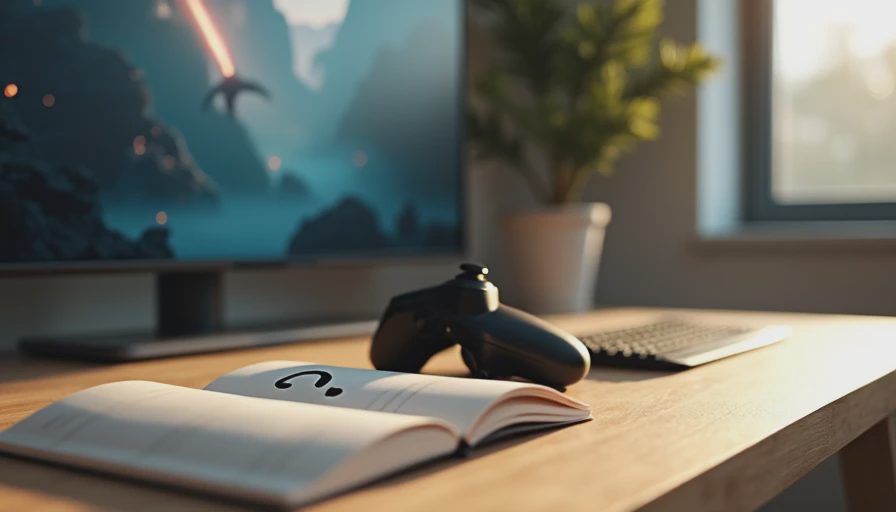
Trailers Are Not the Game
I have lost count of the times a trailer made me sit up straighter. Sweeping camera moves, perfect music cues, a few seconds of gameplay that look fluid and exciting. By the end of the video I am already halfway to buying.
Then the game comes out. I play the first couple of hours. And the feeling that shows up is not excitement. It is a quiet sense that I have seen the best version of this game already—and it was two minutes long.
That gap between the promise and the actual early experience is what this post is about. Not every game with a strong trailer falls into this category. But enough of them do that I have learned to watch for specific warning signs in the opening stretch.
A good game should earn your weekend. A trailer only has to earn your attention for one hundred and twenty seconds. Those are very different jobs.
Sign One: The Opening Hour Feels Like Extended Marketing
The first red flag is when the beginning of the game still feels like a trailer.
You get long cinematic sequences. You get carefully scripted set pieces that look impressive but leave you little to do. You get a tutorial that spends more time showing you how cool the game can look than teaching you how it actually plays. By the time you are allowed to make real decisions, a large chunk of your first session is already gone.
I do not mind a strong opening image. I mind when the game seems reluctant to hand me the controls and let the systems speak for themselves. If the first hour is mostly the game performing for me instead of letting me play, I start to suspect the best material was already used in the marketing.
Real follow-through usually shows up as playable moments that feel as good as the trailer suggested—or better. When those moments keep getting delayed, the trailer starts to look less like a preview and more like a highlight reel of content the game cannot sustain.
Sign Two: The Core Loop Is Still Missing After Ninety Minutes
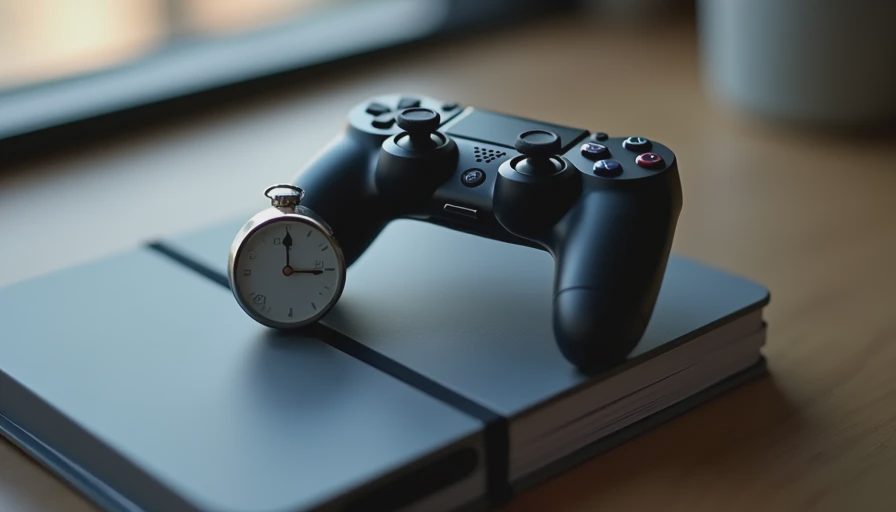
By the ninety-minute mark I want to have touched the activity the game is actually built around.
If it is a combat game, I want to feel the real combat, not a simplified tutorial version. If it is an exploration game, I want a taste of meaningful discovery rather than a guided corridor. If it is a systems-driven game, I want to engage with the systems that will matter twenty hours later.
Some games keep the real toy locked away. They give you a limited version, or a temporary power set, or a story reason why the full experience is not available yet. A little of this is normal. Too much of it is a problem.
When the core loop is still incomplete or heavily restricted after the first long session, the trailer has done more work than the game itself. The marketing showed you the fantasy. The early game is still making you wait for it. For someone with limited time, that wait is expensive.
Sign Three: The Fun Relies on Novelty That Fades Fast
The third sign is more subtle. The opening hours feel good, but the good feeling comes almost entirely from newness—new world, new abilities, new visual spectacle—rather than from a loop that would still be satisfying on a tenth repetition.
You can test this by asking a simple question after two hours: If the graphics were less impressive and the music were quieter, would the actual doing of the game still feel good?
If the answer is uncertain, the game may be running on momentum borrowed from its presentation. That momentum works beautifully in a trailer. It works less well across a full weekend of real play, especially when sessions are short and interruptions are common.
Games with real follow-through tend to reveal a sturdy mechanical or experiential core early. You can feel the thing you will still be doing—and still wanting to do—long after the initial shine wears off. Games that lack it often feel slightly hollow once the first wave of novelty passes.
Why These Signs Matter for Busy Players
People with open schedules can afford to be patient. They can push through a slow or overly scripted opening because they have the hours to reach the better parts. Most working adults do not have that margin.
When your play time competes with sleep, family, and the ordinary maintenance of life, the early hours become a high-stakes sample. If those hours are mostly trailer energy with limited actual play, the risk that the rest of the game will feel the same goes up.
I still get excited by strong trailers. I still watch them. I just no longer treat them as evidence. Evidence is what happens when I pick up the controller and the game has to stand on its own for two uninterrupted hours.
A Calmer Way to Watch Trailers
These days I watch trailers with a different set of questions. How much of this is pure cinematic? How much is actual gameplay? Does the gameplay look like a complete loop or a carefully edited highlight? Is the game showing me systems I will use, or only the most flattering moments?
None of this makes me immune to hype. It just gives me a clearer way to check my expectations once the game is in my hands.
In First Weekend posts going forward, I will keep looking for these same signals. When a game delivers real follow-through early, I will say so. When it feels like the trailer was the best version of the experience, I will say that too—calmly, specifically, and without theatrics.
The goal is not to spoil anyone’s excitement. The goal is to help busy players spend fewer weekends on games that looked finished in the marketing and then asked for more patience than they could usefully give.
If you have ever finished a trailer and felt certain a game would be special, only to feel oddly underwhelmed two hours after launch, you already know the pattern. The signs are usually there early. We just have to be willing to read them.




No comments yet — grab the first one.