The Week That Always Happens
A good game should earn your weekend. It should also survive the week that refuses to give you one.
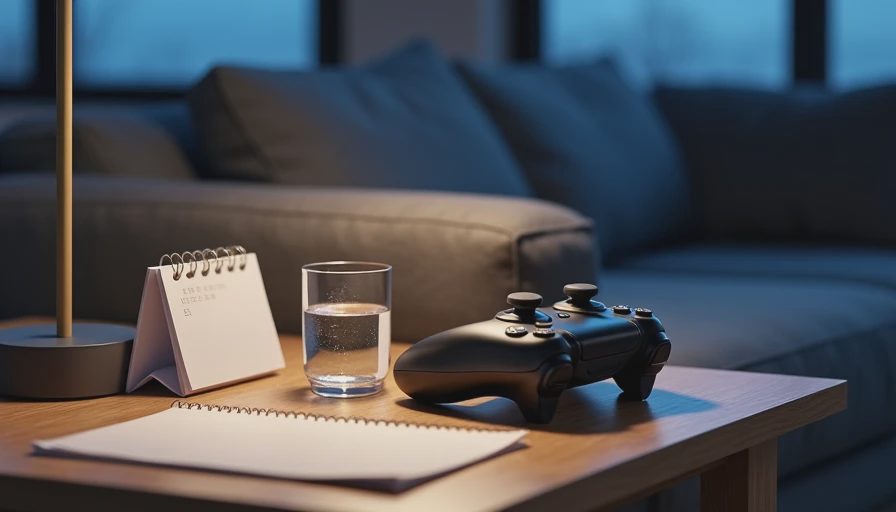
I used to judge games almost entirely by how they felt in a focused stretch of free time. Then real life started inserting itself more aggressively. A late project at work. A kid with a fever. A weekend that turned into errands and family obligations. Suddenly the game I had been enjoying sat untouched for seven or eight days.
When I finally sat back down, one of two things happened. Either I remembered the controls, the goals, and the feeling within a minute or two, or I spent the first twenty minutes lost, menu-diving, and faintly annoyed that I had to relearn what I already knew.
That second experience is more common than most reviews admit. And for anyone who plays in short, interrupted blocks, it is one of the clearest signals that a game may not fit.
Why Interrupted Play Is the Real Test
Most marketing and most reviews assume a player who can give a game long, consistent attention. That player is not me, and it is not most of the people I know who still buy new releases.
My average session is forty-five minutes to an hour and a half. Some weeks I get three sessions. Some weeks I get one. Occasionally life deletes an entire week. The games that stay in rotation are the ones that treat that reality as normal instead of as a failure of commitment.
A game that demands continuous momentum is asking for a kind of time I cannot reliably give. A game that lets me step away and return without friction is respecting the actual shape of my evenings.
What “Feeling Lost” Actually Looks Like

Feeling lost after a break is not just forgetting the story. Story can be refreshed with a quick recap. The deeper problem is mechanical and systemic.
You sit down and the control scheme no longer feels automatic. You open the map and cannot remember which icons matter. You look at your inventory or skill tree and the logic of your previous decisions has gone fuzzy. You start a mission and realize you no longer know the optimal approach you had figured out last time.
That friction costs real minutes. In a short session those minutes are a large percentage of the total time you have. If every return requires a re-orientation tax, the game slowly trains you to stop returning.
I have quit more games from this quiet erosion than from any single bad review or boring stretch.
Games That Handle the Gap Well
The titles that survive my interrupted schedule share a few practical traits.
They give clear, persistent objectives that remain visible after a break. You open the game and immediately know the next sensible thing to do.
They keep the core controls simple enough that muscle memory returns fast. Complicated input combinations or deeply nested menus punish time away.
They offer a short, low-stakes activity you can do while the bigger systems come back into focus. A quick side task, a small crafting loop, or a safe exploration zone can rebuild confidence before you tackle the main thread again.
They avoid punishing you for absence. No resource rot, no missed limited-time events that gate progress, no story that becomes incoherent if you forget a single conversation from eight days ago.
When a game does these things, a week away feels like a pause. When it does not, a week away feels like starting over with extra resentment.
A Personal Test I Run Now
Before I commit serious time to a new release, I deliberately insert a gap. After the first two or three sessions I force myself to leave the game alone for five to seven days. Then I sit down and pay attention to the first fifteen minutes.
If I am back in the flow quickly and the game feels familiar, it stays in the active list. If I spend those fifteen minutes confused, frustrated, or reaching for a wiki, I seriously consider dropping it.
This test is not about difficulty. Hard games can still be easy to re-enter. Easy games can still be full of systems that evaporate from memory. The test is about respect for the player’s actual life.
How to Spot the Risk Before You Buy
You can learn a lot from early gameplay footage and first-week player reports if you know what to look for.
Watch how much of the interface is visible and self-explanatory. Games that bury critical information in nested menus or temporary on-screen prompts tend to punish breaks.
Listen for comments about “I had to relearn the controls after a few days.” That phrase appears more often than you might expect, and it is a useful warning.
Check whether the game has a robust journal, quest log, or objective tracker that survives time away. A good log is not flavor text. It is a lifeline for interrupted players.
Notice if the core loop is something you can partially complete in a short session and then resume cleanly. Games built around long, unbroken sequences of concentration are riskier for anyone whose free time arrives in fragments.
None of these signals is perfect. Together they give you a clearer picture than the aggregate score.
Protecting the Limited Hours You Have
I still get pulled into games that demand more continuous attention than I can give. When that happens I now make a cleaner decision. Either I accept that this particular title will have to wait for a lighter stretch of calendar, or I drop it and protect the evenings I do have for something that fits the life I am actually living.
There is no moral failure in choosing the second option. There is only the practical recognition that time away is normal and that a game which cannot handle it is asking for a different player than the one holding the controller.
The best games for busy adults are not always the ones that keep you thinking about them all day. They are the ones that let you forget them for a week and still feel like old friends when you return.
That quiet reliability is rarer than it should be. When you find it, the game has already started earning every weekend you decide to give it.





No comments yet — grab the first one.