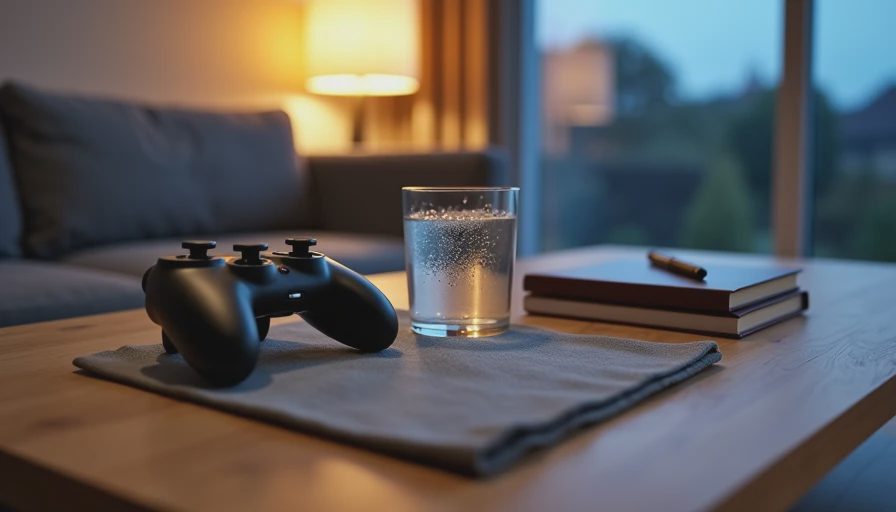
The Hook That Sells the Weekend
A good game should earn your weekend. That line sits on a sticky note next to my monitor, right above the controller charging dock. I wrote it after one too many Friday-night purchases that left me staring at the TV on Sunday wondering where the fun went.
We all know the feeling. The trailer hits, the reviews drop, the launch day price still feels full, and you tell yourself you’ll “just try the first couple of hours.” Then those hours either grab you by the collar or quietly let you walk away. The opening hook is the part of a new release that does most of the heavy lifting for busy players. It has to. We don’t have the luxury of grinding through twelve hours of tutorial and filler hoping the real game shows up later.
But here’s the part that keeps me honest: sometimes we give that hook too much power. Sometimes a game starts slow on purpose and still becomes the one you finish. Sometimes a dazzling first night is pure marketing momentum that runs out by Tuesday. The real skill is learning which kind of hook you’re looking at.
Why the First Hours Hit Harder When You’re an Adult
When I was twenty-two I could burn an entire weekend on a game that felt mediocre until hour fifteen. That version of me had no kids, no early meetings, and a completely different definition of “free time.” Now I’m thirty-six, living in Carmel, Indiana, with a logistics job that runs on schedules and tradeoffs. My gaming window is usually 8:30 to 10:00 p.m. if the kids cooperate and Anna doesn’t need the living room for her own downtime.
That reality changes the math. A weak opening isn’t just “slow burn.” It’s a direct tax on the only free hours I have that week. If the first session doesn’t give me a reason to come back tomorrow, the game goes into the mental backlog pile faster than a delayed shipment.
I started noticing a pattern. Games that respected my time in the first two hours almost always got finished. Games that demanded I “stick with it” rarely did. The difference wasn’t polish or production value. It was whether the opening sequence understood that adult attention is expensive.
What a Useful Opening Hook Actually Does
A strong first-hour experience for someone like me does three specific things.
First, it shows me the core loop early. Not a tutorial version of the loop. The real one. If the game is about exploration, I need to feel the pull of the next ridge or doorway before the credits of the opening cutscene finish. If it’s combat, I need to feel the weight of the controls and the satisfaction of a clean exchange before the story dumps another ten minutes of exposition on me.
Second, it gives me a small, complete win. Something I can close the night on and feel finished. Not a cliffhanger that forces me to stay up until midnight. Just a clean beat that says, “You accomplished something. Come back when you can.”
Third, it leaves a clear question in my head. Not “What happens next in the plot?” but “What does the next session feel like?” That distinction matters. Plot curiosity is cheap. Mechanical curiosity is what keeps me logging back in after a chaotic week.
When a game does all three, I usually know by the end of the first night whether it’s staying in the rotation. When it fails any of them, I start calculating how many more hours I’m willing to gamble.
The Nights the Hook Lied to Me

I still remember the Friday I bought a big open-world release that everyone called “the next big thing.” The opening two hours were gorgeous. Cinematic, emotional, full of promise. I walked away from the TV thinking I’d found the game that would own the next month of my evenings.
By the third session the magic had thinned. The exploration loop turned into checklist busywork. The combat never evolved past the first-hour tricks. The story kept promising bigger things while the actual play stayed flat. That game still sits unfinished on the hard drive. The opening sold me a feeling the rest of the product never delivered.
On the other side, I almost skipped a quieter strategy game because the first hour felt dry and systems-heavy. No flashy set pieces. Just menus, maps, and decisions. I gave it a second night mostly out of stubbornness. By the end of that second session the systems clicked, the decisions started mattering, and the game became one of the few I finished that year. The hook was quiet, but it was honest. It showed me exactly what the experience would be instead of what the marketing hoped I’d feel.
Those two experiences taught me the same lesson from opposite directions: the opening is data, not destiny. You still have to read it carefully.
How I Test an Opening Without Wasting the Weekend
I have a simple personal checklist I run after every first session with a new release. It’s not scientific. It’s just the questions that keep me from lying to myself.
Did I want to play more the moment I shut the console off?
Did the core activity feel good even before the story or systems fully opened up?
Could I explain to Anna in one sentence what makes this game different from the last three I tried?
If I had to leave it alone for five days because of work or family, would I still remember how the controls felt?
If the answers are mostly yes, the game stays in the active rotation. If they’re mixed, I give it one more short session and then decide. If they’re mostly no, I stop. No guilt. No “maybe it gets better.” Just a clear call that this one did not earn the next available weekend slot.
That last point is the one I wish more review culture talked about. Plenty of games “get good later.” Plenty of those same games never get the later from people who only have four or five hours a week. A strong opening doesn’t guarantee a great full experience, but a weak one almost guarantees the game never reaches the part where it supposedly improves.
When a Slow Start Is Actually a Feature
Not every good game needs to explode out of the gate. Some of the best experiences I’ve had in the last few years started with deliberate, quiet openings. They taught systems carefully. They let atmosphere do the work instead of set pieces. They trusted that the player would stick around if the foundation was solid.
Those games still passed my first-night test, just differently. Instead of adrenaline, they left me with a sense of competence and curiosity. I understood what I was doing and why it mattered. That kind of quiet confidence is rarer than another explosion-filled prologue, and it tends to age better across a long campaign.
The key is honesty. A slow opening that is honest about the kind of game it is will still earn my time. A slow opening that is just padding until the “real” game starts almost never will.
The Practical Takeaway for Busy Players
If you’re reading this because you have limited evenings and a full-price new release sitting in your cart, try this before you hit buy:
Look past the trailer length and the metacritic number for a moment. Search for the first hour of actual gameplay footage from someone who isn’t racing to the end. Watch how long it takes for the core loop to appear. Notice whether the game gives the player a complete little arc in that first session or just keeps promising bigger things later.
Then ask yourself the same question I ask: does this opening look like it would still feel good on a random Tuesday night after a long day, or does it only work when you’re hyped and free for an entire weekend?
The answer doesn’t have to be perfect. It just has to be honest. Because once the money is spent and the disc or download is installed, the only resource left is your time. And a good game should earn that weekend—not just the first shiny hour of it.
I’ve walked away from plenty of strong openings that turned out to be empty calories. I’ve also given second chances to quieter starts that became favorites. The difference was never the volume of the hook. It was whether the game was already telling the truth about itself while it had my full attention.
That’s the only opening that still matters when the kids are finally asleep and the controller is in your hands.




No comments yet — grab the first one.