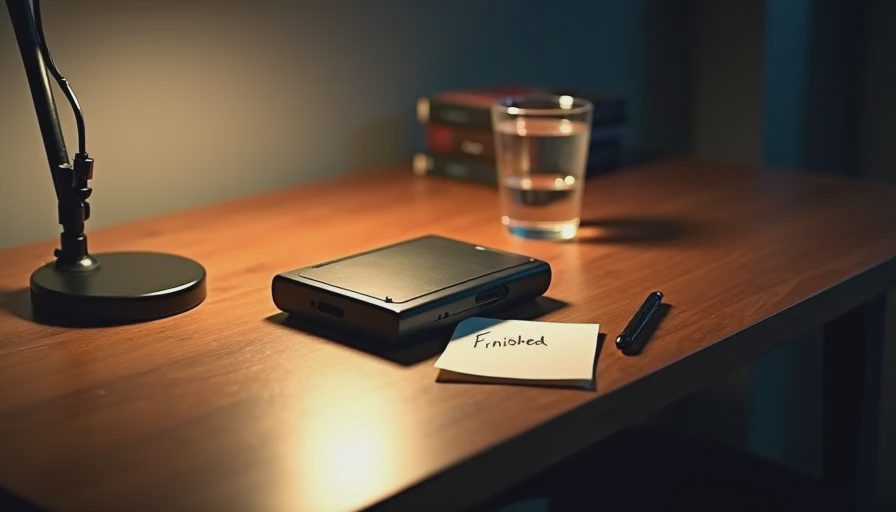
The Difference Between Obsession and Completion
A good game should earn your weekend. The best ones also leave you with a finished save file and a clean sense of having reached the end.
I used to measure how much I liked a game by how often it occupied my thoughts during the day. If I caught myself thinking about the next session while answering emails or standing in the grocery line, I treated that as proof of quality. The game had gotten its hooks in. That felt like success.
Over time I noticed a quieter pattern. Some of the games I thought about most were also the ones I never finished. They lived in my head as ongoing possibilities. They rarely arrived at a conclusion. Meanwhile, a smaller group of titles produced less constant mental noise and more actual completed experiences. I reached the credits. I felt done in a satisfying way. Those were the ones that stayed with me longest.
The difference was not intensity of interest. It was whether the design allowed a busy adult to reach the end.
Why “I Can’t Stop Thinking About It” Is an Incomplete Signal
Constant mental occupancy can come from several sources. Some games earn it through strong systems, memorable characters, or genuine curiosity about what happens next. Others generate it through unresolved tension, open loops, or a sense that you are always slightly behind. The second category can feel compelling in the moment and still leave you with an unfinished save months later.
For players with limited free time, the cost of that open loop is higher. Every week the game remains unfinished is another week it occupies a mental slot that could be released. The games that let you finish cleanly free that slot. The ones that keep extending the sense of unfinished business quietly tax it.
I have stopped treating daydreaming about a game as automatic evidence that it is the right fit. I now look for a different marker: whether the structure, pacing, and scope make completion realistic inside the life I actually have.
What Finishable Design Looks Like
Games that reach the end on a busy schedule tend to share practical traits.
They have a clear through-line that does not require exhaustive side-content completion to feel coherent. You can follow the main path and still arrive at a satisfying conclusion.
They respect session length. Major story beats and system unlocks are paced so that a forty-five-minute or ninety-minute evening can still produce meaningful progress.
They avoid soft locks that demand large, uninterrupted blocks of time. If the only way forward is a three-hour concentrated push, the game is asking for a different calendar than many of us can supply.
They end when the experience has said what it needed to say. Padding, repeated structures, or artificial extension of the map all reduce the odds that a limited-time player will ever see the credits.
When these elements are present, finishing becomes a normal outcome rather than a heroic one.
Personal Evidence From Both Sides
I spent most of one winter returning to a large, highly praised game that I thought about constantly. The world was rich. The systems were deep. I made steady but incomplete progress across months of short sessions. I never reached the end. The save file is still there, a quiet reminder of something that stayed open too long.
The same year I played a shorter, more focused title that generated less daily mental chatter. I finished it across three weeks of ordinary evenings. The conclusion landed cleanly. I still remember the final hours more vividly than most of the unfinished epic. The difference was not which game was “better” in the abstract. It was which one allowed a complete experience inside the time I could actually give.
That contrast changed the filter I use.
A Clearer Personal Metric
I now ask a simple question early: does this game look like something I can finish without it requiring a special season of life? If the answer depends on suddenly having more free time than I normally do, I treat the game as higher risk. I may still play it. I stop expecting completion to happen automatically.
This shift has not made me avoid ambitious games. It has made me more deliberate about when I start them and more realistic about the conditions they require. Some titles are worth clearing space for. Most are better evaluated by whether they can succeed inside the space I already have.
The Quiet Value of a Finished Save
There is a specific satisfaction that only arrives with completion. The story resolves. The systems have been seen through to their designed end state. The mental slot the game occupied is released. You can remember the experience as a whole rather than as an ongoing obligation.
For players who already juggle work, family, and limited evening hours, that completed shape is rarer than it should be. The culture around new releases still tends to celebrate the games that dominate attention rather than the ones that can be finished cleanly. Both kinds of games can be excellent. Only one of them consistently fits the constraint that defines most adult schedules.
I still get pulled in by games that occupy my thoughts. I simply no longer treat that occupation as the highest signal of value. The clearer signal is whether I can reach the end, close the file, and feel that the time was well spent.
A good game should earn your weekend. The best ones also let you finish what you started, then quietly step aside so the next weekend can belong to something else.



No comments yet — grab the first one.